Buy arzthaftpflicht.eu ?
We are moving the project
arzthaftpflicht.eu .
Are you interested in purchasing the domain
arzthaftpflicht.eu ?
domain@kv-gmbh.de · 0541-91531010
Buy arzthaftpflicht.eu ?
What is the difference between frequency modulation and amplitude modulation?
Frequency modulation (FM) and amplitude modulation (AM) are two different methods used in radio broadcasting to carry a signal. The main difference between the two is how they vary the carrier wave to transmit information. In AM, the amplitude of the carrier wave is varied in proportion to that of the input signal, while in FM, the frequency of the carrier wave is varied. FM is known for its better sound quality and resistance to noise, while AM is simpler and has a longer range. **
What is the difference between amplitude modulation and frequency modulation?
Amplitude modulation (AM) is a method of encoding information on a carrier wave by varying its amplitude, while frequency modulation (FM) encodes information by varying the frequency of the carrier wave. In AM, the amplitude of the carrier wave is directly proportional to the amplitude of the input signal, whereas in FM, the frequency of the carrier wave is varied in proportion to the amplitude of the input signal. FM is less susceptible to noise and interference compared to AM, making it a more reliable method for transmitting information over long distances. **
Similar search terms for Modulation
Top-Angebote
Products related to Modulation:
-
AND Medical Logo A&D Medical Automated Office Blood Pressure (AOBP) Monitor""" A&D Medical Automated Office Blood Pressure (AOBP) Monitor Introducing the A&D Medical Professional Office Blood Pressure Monitor with AOBP – the ultimate clinical-grade solution for precise and convenient blood pressure measurements in..."515,00 $*Shipping: 0,00 $Secure redirect to the provider
-
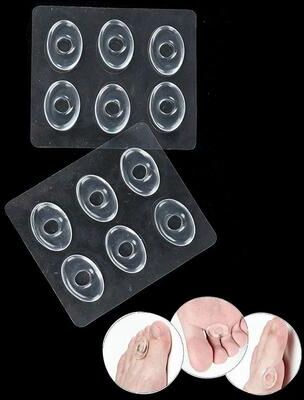
Uplift Essentials Silicone Medical Gel Corn Removal Patches Silicone Medical Gel Corn Removal PatchesExperience a new standard of foot comfort with a solution designed for gentle yet effective restoration. These silicone foot corn removal patches utilize an advanced medical gel core that works to soften stubborn buildup while providing a...34,97 $*Shipping: 0,00 $Secure redirect to the provider
-
CounterArt "Insurance 4 Pack Absorbent Stone Coasters with Cork Backing 4"" Square Made in The USA Absorbent Wipes Clean"4 Pack Absorbent Stone Coasters with Protective Cork Backing 4” Square. Manufactured in the USA of absorbent stone to absorb excess condensation from beverages. Cork backing protects your surfaces from scratches and stains.30,49 $*Shipping: 0,00 $Secure redirect to the provider
-
Daily Deals Depot Cooling Face Sunscreen Mask With Full Coverage Sun Protection grayEnjoy every outdoor adventure without worrying about harsh sun exposure. This UV protection face mask1pcs is designed for outdoor enthusiasts, cyclists, beachgoers, and anyone who spends long hours under the sun. Featuring a comfortable 3D fit and...59,97 $*Shipping: 0,00 $Secure redirect to the provider



-
Does the malpractice insurance provide enough coverage?
The adequacy of malpractice insurance coverage depends on the specific needs and risks of the individual or organization. It is important to carefully assess the potential liabilities and risks involved in the practice or business and then determine the appropriate level of coverage. Factors such as the type of services provided, the size of the practice, and the location can all impact the necessary coverage. It is advisable to regularly review and update malpractice insurance coverage to ensure it remains adequate for the evolving needs of the practice or business. **
-
How does modulation work?
Modulation is the process of varying a carrier signal's properties, such as its amplitude, frequency, or phase, in order to encode information onto it. This allows the carrier signal to carry the information over a communication channel. For example, in amplitude modulation (AM), the amplitude of the carrier signal is varied in accordance with the information signal. At the receiving end, the modulation is reversed through demodulation, allowing the original information to be recovered. Modulation is a fundamental concept in communication systems, allowing for the transmission of information over long distances. **
-
What are the characteristics of modulation?
Modulation is the process of varying a carrier signal's properties, such as amplitude, frequency, or phase, in order to transmit information. The characteristics of modulation include the ability to encode information onto a carrier signal, allowing for efficient transmission over long distances. Modulation also enables multiple signals to be transmitted simultaneously over the same medium, known as multiplexing. Additionally, modulation allows for the signal to be easily demodulated and the original information to be recovered at the receiving end. **
-
What is the project Pulse Width Modulation?
Pulse Width Modulation (PWM) is a technique used to encode a message into a pulsing signal. It involves varying the width of the pulse while keeping the frequency constant. This method is commonly used in electronic devices to control the power supplied to electrical devices, such as motors, LEDs, and speakers. By adjusting the duty cycle of the pulse, PWM allows for precise control over the output voltage or current, making it an efficient way to regulate the speed or intensity of various components. **


How can pulse width modulation be explained simply?
Pulse width modulation (PWM) is a method used to control the amount of power delivered to a load by varying the width of the pulse signal. In simple terms, PWM works by turning the power on and off at a fast rate, with the ratio of on-time to off-time determining the average power delivered. By adjusting this ratio, PWM can effectively control the speed of motors, brightness of LEDs, and other parameters in electronic systems. **
How does the modulation transfer function typically proceed?
The modulation transfer function (MTF) typically proceeds by measuring the ability of an optical system to transfer contrast from the object to the image. This is done by analyzing the spatial frequency response of the system, which describes how well the system can reproduce different levels of detail in the object. The MTF is often measured by imaging a test pattern with known spatial frequencies and analyzing the contrast of the resulting image. The MTF is then plotted as a function of spatial frequency, showing how contrast is transferred at different levels of detail. **
Top-Angebote
Products related to Modulation:
-
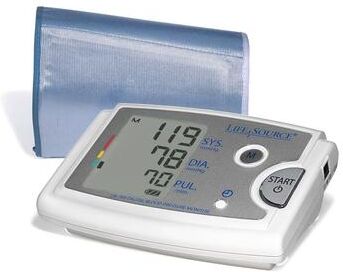
AND Medical Logo A&D Medical XL Cuff Blood Pressure Monitor""" A&D Medical Blood Pressure Monitor with XL Cuff The only home blood pressure monitor designed for people with larger arms and to provide accurate readings. This advanced device features a large cuff that ensures an optimal and secure fit during..."129,00 $*Shipping: 0,00 $Secure redirect to the provider
-
AND Medical Logo A&D Medical PREMIUM+ Wireless Wide Base Scale""" A&D Medical PREMIUM+ Wireless Wide Base Scale Introducing the PREMIUM+ Wireless Wide Base Weight Scale – your ultimate solution for stability, support, and precise weight measurement. With an impressive weight capacity of up to 550 pounds, this..."134,00 $*Shipping: 0,00 $Secure redirect to the provider
-
AND Medical Logo A&D Medical Automated Office Blood Pressure (AOBP) Monitor""" A&D Medical Automated Office Blood Pressure (AOBP) Monitor Introducing the A&D Medical Professional Office Blood Pressure Monitor with AOBP – the ultimate clinical-grade solution for precise and convenient blood pressure measurements in..."515,00 $*Shipping: 0,00 $Secure redirect to the provider
-
Uplift Essentials Silicone Medical Gel Corn Removal Patches Silicone Medical Gel Corn Removal PatchesExperience a new standard of foot comfort with a solution designed for gentle yet effective restoration. These silicone foot corn removal patches utilize an advanced medical gel core that works to soften stubborn buildup while providing a...34,97 $*Shipping: 0,00 $Secure redirect to the provider
-
What is the difference between frequency modulation and amplitude modulation?
Frequency modulation (FM) and amplitude modulation (AM) are two different methods used in radio broadcasting to carry a signal. The main difference between the two is how they vary the carrier wave to transmit information. In AM, the amplitude of the carrier wave is varied in proportion to that of the input signal, while in FM, the frequency of the carrier wave is varied. FM is known for its better sound quality and resistance to noise, while AM is simpler and has a longer range. **
-
What is the difference between amplitude modulation and frequency modulation?
Amplitude modulation (AM) is a method of encoding information on a carrier wave by varying its amplitude, while frequency modulation (FM) encodes information by varying the frequency of the carrier wave. In AM, the amplitude of the carrier wave is directly proportional to the amplitude of the input signal, whereas in FM, the frequency of the carrier wave is varied in proportion to the amplitude of the input signal. FM is less susceptible to noise and interference compared to AM, making it a more reliable method for transmitting information over long distances. **
-
Does the malpractice insurance provide enough coverage?
The adequacy of malpractice insurance coverage depends on the specific needs and risks of the individual or organization. It is important to carefully assess the potential liabilities and risks involved in the practice or business and then determine the appropriate level of coverage. Factors such as the type of services provided, the size of the practice, and the location can all impact the necessary coverage. It is advisable to regularly review and update malpractice insurance coverage to ensure it remains adequate for the evolving needs of the practice or business. **
-
How does modulation work?
Modulation is the process of varying a carrier signal's properties, such as its amplitude, frequency, or phase, in order to encode information onto it. This allows the carrier signal to carry the information over a communication channel. For example, in amplitude modulation (AM), the amplitude of the carrier signal is varied in accordance with the information signal. At the receiving end, the modulation is reversed through demodulation, allowing the original information to be recovered. Modulation is a fundamental concept in communication systems, allowing for the transmission of information over long distances. **
Similar search terms for Modulation
-
CounterArt "Insurance 4 Pack Absorbent Stone Coasters with Cork Backing 4"" Square Made in The USA Absorbent Wipes Clean"4 Pack Absorbent Stone Coasters with Protective Cork Backing 4” Square. Manufactured in the USA of absorbent stone to absorb excess condensation from beverages. Cork backing protects your surfaces from scratches and stains.30,49 $*Shipping: 0,00 $Secure redirect to the provider
-
Daily Deals Depot Cooling Face Sunscreen Mask With Full Coverage Sun Protection grayEnjoy every outdoor adventure without worrying about harsh sun exposure. This UV protection face mask1pcs is designed for outdoor enthusiasts, cyclists, beachgoers, and anyone who spends long hours under the sun. Featuring a comfortable 3D fit and...59,97 $*Shipping: 0,00 $Secure redirect to the provider
-
Lush Living Finds UV Protection Face Mask Neck Gaiter Full Coverage Sun Shield Scarf For Men & Women UV Protection Face Mask Neck Gaiter Full Coverage Sun Shield Scarf For Men & WomenExperience cool, confident protection every time you head outdoors. Designed for active lifestyles, this 1 pc of white UV face mask offers full coverage for your face, neck, and ears while helping shield your skin from harsh sunlight, dust, and...35,97 $*Shipping: 0,00 $Secure redirect to the provider
-
Nonin Medical Nonin Soft Fingertip Sensors""" Nonin Soft Fingertip Sensors Small, medium and large Soft Sensors, 3 foot cable, 7 Pin Connector Increased warranty: Now 2 years Increased EMC compliance: Meets ISO 9919* Nonin branded: Distinctive new dark gray color with Nonin's trusted name..."250,00 $*Shipping: 0,00 $Secure redirect to the provider
-
What are the characteristics of modulation?
Modulation is the process of varying a carrier signal's properties, such as amplitude, frequency, or phase, in order to transmit information. The characteristics of modulation include the ability to encode information onto a carrier signal, allowing for efficient transmission over long distances. Modulation also enables multiple signals to be transmitted simultaneously over the same medium, known as multiplexing. Additionally, modulation allows for the signal to be easily demodulated and the original information to be recovered at the receiving end. **
-
What is the project Pulse Width Modulation?
Pulse Width Modulation (PWM) is a technique used to encode a message into a pulsing signal. It involves varying the width of the pulse while keeping the frequency constant. This method is commonly used in electronic devices to control the power supplied to electrical devices, such as motors, LEDs, and speakers. By adjusting the duty cycle of the pulse, PWM allows for precise control over the output voltage or current, making it an efficient way to regulate the speed or intensity of various components. **
-
How can pulse width modulation be explained simply?
Pulse width modulation (PWM) is a method used to control the amount of power delivered to a load by varying the width of the pulse signal. In simple terms, PWM works by turning the power on and off at a fast rate, with the ratio of on-time to off-time determining the average power delivered. By adjusting this ratio, PWM can effectively control the speed of motors, brightness of LEDs, and other parameters in electronic systems. **
-
How does the modulation transfer function typically proceed?
The modulation transfer function (MTF) typically proceeds by measuring the ability of an optical system to transfer contrast from the object to the image. This is done by analyzing the spatial frequency response of the system, which describes how well the system can reproduce different levels of detail in the object. The MTF is often measured by imaging a test pattern with known spatial frequencies and analyzing the contrast of the resulting image. The MTF is then plotted as a function of spatial frequency, showing how contrast is transferred at different levels of detail. **
* All prices are inclusive of VAT and, if applicable, plus shipping costs. The offer information is based on the details provided by the respective shop and is updated through automated processes. Real-time updates do not occur, so deviations can occur in individual cases. ** Note: Parts of this content were created by AI.